After nearly three years of studying the architecture of H.M. Francis in Fitchburg, I'm moving on to a new research topic.
The work of the Francis firm will always be something I'll have a fascination in, but I feel it is necessary to begin working on another project.
Starting in May, I'm going to begin researching baseball teams in Fitchburg. Baseball was a very big part of my childhood as well as the lives of countless other young boys in America. I have very strong, emotional ties to Little League Baseball, Major League Baseball and even the minor leagues. The intricacy, chess match-like qualities of baseball have always fascinated me to a great degree. I enjoy the silence of the game. The pops of the bat, the skidding of the grass, the hurried footsteps of the batters as well as the smell of fresh cut grass, and the heat of the afternoon sun all have a special place in my heart. Through all of the events of a baseball game, the voices of the players are often subdued, and muted to spectators. You have to rely on umpire signals, player body language and dirt kicking to understand what the players go through. Today's television coverage will sometimes feature a player wearing a microphone through warm-ups or even in the dugout but those invasions taint the game for me. It's much more powerful to be a casual onlooker interpreting the grimaces and celebrations than a fly on the wall. I've attended numerous baseball games in my life, whether it's professional (Red Sox), minor league (Spinners, Sea Dogs, Paw Sox) or even amateur (Tornadoes) and no matter where my seat was, I rarely heard the dugout banter or discussions amongst players.
I much prefer that atmosphere, that wall between the spectator and athlete, the fan and the superstar.
My research is a bit open-ended at this point. I haven't devoted much time to preparing an outline towards a thesis or working goal, other to simply learn. I decided upon Fitchburg baseball because it is my current home but also because baseball at its infancy, as well as during the "deadball era" had many social and cultural implications on a community.
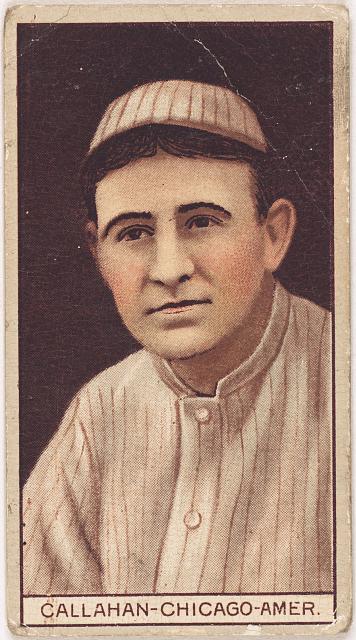
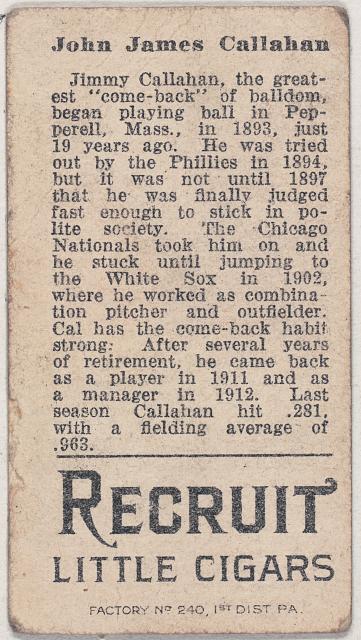
Two players that I want to focus on, in regards to their relationships to Fitchburg are Patrick Moran and "Nixey" Callahan.
Both grew up in Fitchburg, playing on local youth teams but later made it to the American and National Leagues.
Patrick Moran was manager of the Cincinnati Reds in 1919 when the Chicago White Sox threw the World Series and were blacklisted from baseball. It's also been said that Callahan threw the first no-hitter in the American League.
Though their major league exploits are fairly well-documented in various encyclopedias and online databases, I'm interested in seeing Moran and Callahan at a more local level before they made it to the big stage.
As the school year winds down and summer begins, I'll continue to post my research findings and get back into old grooves.